

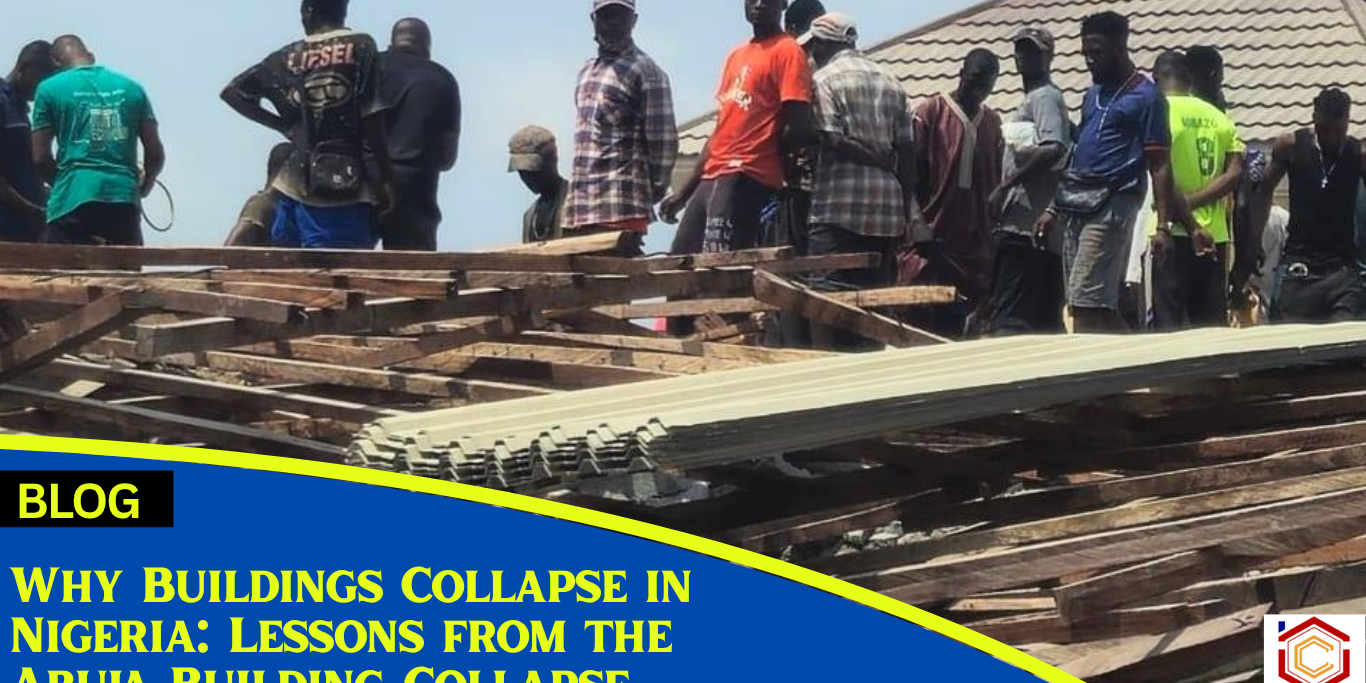
The recent building collapse in Durumi 3, Abuja, is another painful reminder of the growing challenges facing the construction industry in Nigeria. According to reports, the tragedy was linked to compromised cement mixtures used during construction, leading to the loss of five construction workers.
Our thoughts and deepest condolences go to the families, friends, and loved ones of those who lost their lives in this unfortunate incident. No building project should ever end in tragedy, and no family should have to suffer such a loss because of preventable construction failures.
This heartbreaking event has created an urgent need to address the recurring causes of building collapse in Nigeria and to reinforce the importance of quality, compliance, and proper construction practices across every stage of a project.
With over thirty reported building collapses in the Federal Capital Territory since 2008, the warning signs have been clear for years. The causes are often known and documented, yet many of the same mistakes continue to occur.
The Abuja incident is not an isolated case. It reflects deeper systemic issues that continue to threaten the safety and durability of buildings across the country.
Why Buildings Collapse in Nigeria
Building collapse rarely happens without warning. In most cases, it is the result of multiple failures that gradually weaken the structure over time.
Some of the most common causes include:
- Compromised or substandard construction materials
- Poor workmanship and inadequate supervision
- Failure to follow engineering specifications
- Weak regulatory enforcement
- Improper waterproofing and moisture protection
- Structural overload and poor surface strength
When these issues combine, the structural integrity of a building becomes severely compromised.
The Foundation: Where Structural Safety Begins
Every building depends on the strength of its foundation. If the foundation is weak, the entire structure becomes vulnerable.
A compromised cement mixture reduces the compressive strength of concrete and affects the ability of the structure to safely carry load and stress. Over time, cracks, settlement, and instability begin to develop beneath the structure.
Proper foundation construction requires:
- Correct material ratios
- High-quality cement and aggregates
- Proper curing methods
- Reliable bonding and reinforcement systems
Construction chemicals also play a critical role in improving concrete performance and durability.
Solutions such as Costar admixtures and bonding systems help improve workability, strength development, and overall structural reliability when properly applied.
The Importance of Structural Strength and Surface Durability
Beyond the foundation, every slab, beam, and column must be designed to withstand pressure and environmental stress.
When poor-quality materials are used, surfaces begin to deteriorate prematurely. Cracks appear, reinforcement becomes exposed, and structural elements gradually weaken.
Products such as Costar Top 200 help strengthen surfaces and improve durability in areas exposed to heavy load and continuous stress.
How Waterproofing Protects Buildings
One of the most overlooked contributors to structural deterioration is water penetration.
Moisture entering a building can weaken concrete, corrode reinforcement bars, and reduce structural stability over time. During heavy rainfall, buildings without proper waterproofing become increasingly vulnerable to long-term damage.
Areas such as rooftops, balconies, terraces, and wet areas require reliable waterproofing systems.
Solutions like Costar Conseal 250 help form seamless waterproof barriers that protect structures from moisture intrusion, environmental exposure, and gradual deterioration.
Waterproofing is not only about preventing leaks. It is about preserving the long-term integrity of the structure itself.
The Role of Proper Adhesion and Installation
Poor adhesion and incorrect installation methods can also contribute to building failure.
Improper tile installation, weak bonding, and poor surface preparation increase the risk of cracks, detachment, and water penetration.
Using high-quality adhesive systems ensures stronger bonding and more durable finishes.
Costar Tile Fix solutions are designed to provide strong adhesion, flexibility, and long-lasting performance across different building surfaces.
Why Compliance and Quality Control Matter
The Abuja collapse highlights the urgent need for stronger compliance and quality control within the construction industry.
Even the best materials cannot prevent failure if proper standards are ignored. Construction projects require:
- Strict adherence to engineering specifications
- Skilled workmanship
- Proper supervision and inspection
- Material testing and verification
- Use of certified construction solutions
When these systems fail, lives are placed at risk.
Building for Safety, Not Just Speed
In many projects, pressure to reduce costs or accelerate completion often leads to dangerous shortcuts. However, compromising quality creates long-term consequences that can become catastrophic.
True construction success is measured not only by speed or appearance, but by durability, safety, and long-term structural performance.
Every stage of construction, from the foundation to the rooftop, must be executed with quality and accountability.
Take Action for Safer Construction
The tragic loss of lives in Abuja should serve as a wake-up call for the entire construction industry. Preventing future collapses requires a commitment to stronger standards, better materials, reliable waterproofing, and proper workmanship.
At Costarchem Nigeria, we remain committed to supporting safer and more durable construction through high-performance construction chemical solutions designed for strength, protection, and reliability.
Contact Costarchem Nigeria today to learn how our construction solutions can support safer, stronger, and more reliable building projects.
📧 info@costarchem.ng
🌐 www.costarchem.ng
Conclusion
The Abuja building collapse is not just another news headline. It is a reminder of the devastating consequences of compromised quality and weak compliance within the construction industry.
Buildings should protect lives, not endanger them.
By prioritizing quality materials, reliable waterproofing systems, proper adhesion, and skilled workmanship, Nigeria can move toward safer and more durable construction practices that protect both structures and human lives for generations to come.